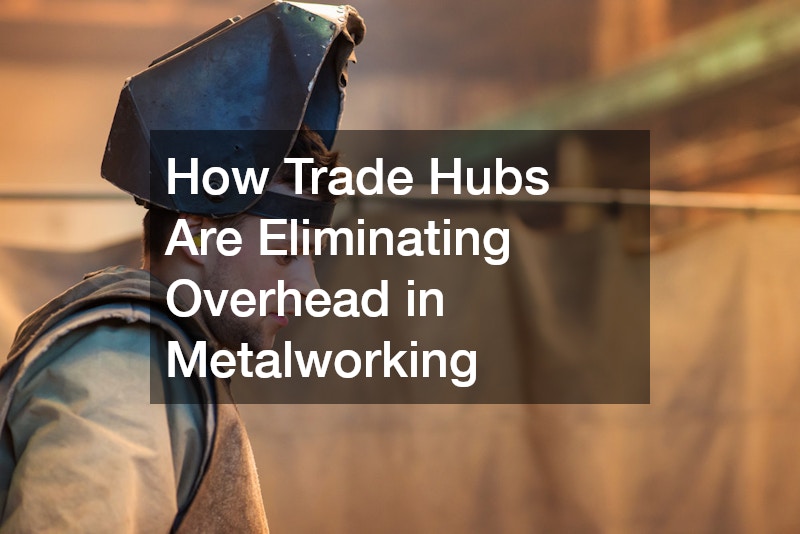
The modern industrial landscape is undergoing a profound structural shift. For decades, independent metalworking operations—ranging from heavy structural fabricators to niche restoration mechanics—operated in isolated facilities scattered across industrial corridors. Each business shouldered the full weight of its own capital expenditure: dedicated real estate, high-voltage electrical setups, heavy material handling equipment, enterprise security, and isolated technology networks. As land costs, machinery expenses, and insurance premiums continue to escalate, this traditional standalone operational model is becoming unsustainable for small to medium-sized metal enterprises.
Enter the industrial trade hub. Inspired by the collaborative efficiency of tech incubators and co-working spaces, industrial trade hubs bring complementary metalworking businesses under one roof or within a shared, master-planned industrial complex. By pooling capital, sharing expensive infrastructure, and fostering internal cross-referencing, these hubs are radically reducing overhead, shortening supply chains, and unlocking profitability for trades that previously operated on razor-thin margins.
The Financial Reality of the Standalone Industrial Shop
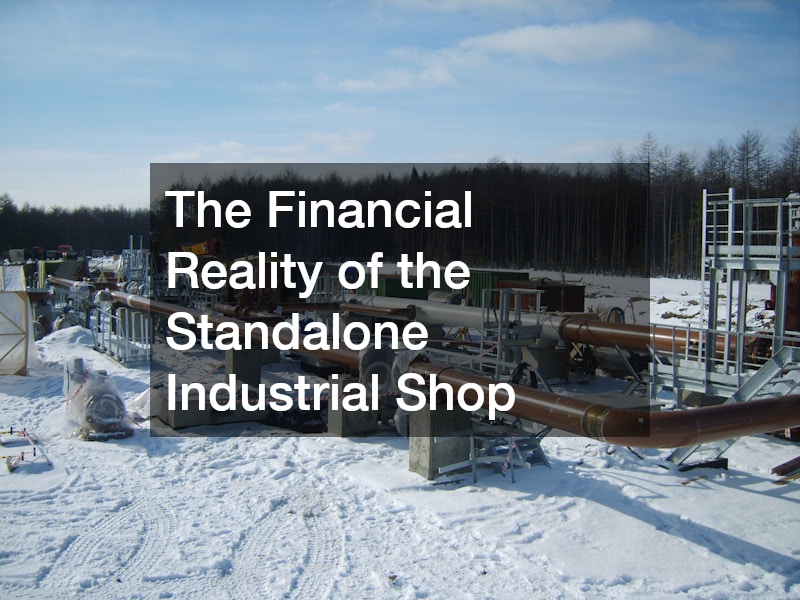
To understand why trade hubs are gaining traction, one must examine the cost structure of a standalone metal facility. A typical shop manager attempting to scale an operation faces astronomical baseline costs before generating a single dollar of revenue. Securing real estate zoned for heavy industrial activity, installing environmental containment systems, and laying down heavy-duty utility infrastructure require massive upfront investment. In traditional industrial real estate, the barrier to entry is notoriously steep. Leasing or purchasing an independent parcel forces a business owner to absorb the entirety of property acquisition fees, specialized permitting costs, and facility retrofits. Before a single piece of client work is cut or welded, tens or even hundreds of thousands of dollars are tied up in non-productive capital overhead, creating an immediate financial strain that can take years to offset.
Furthermore, capital equipment utilization in isolated shops is notoriously inefficient. A specialty trade shop might require a specific piece of heavy lifting apparatus or a dedicated threading system for utility installation, but that machinery may only run for six hours a week. The remaining time, that asset sits idle on the shop floor, consuming valuable square footage while depreciating on the balance sheet. This idle machinery represents trapped liquidity—capital that could otherwise be deployed toward skilled labor, raw materials, or business expansion. In a standalone environment, every business owner must own the full suite of equipment necessary to handle peak project demands, even if those peaks only occur a few times per quarter, locking up vital cash flow in low-yield physical assets.
Beyond hardware, operational overhead including site security, high-bandwidth data lines, and specialized compliance monitoring creates a constant cash flow drain. Independent operators must individually negotiate separate utility contracts, finance site-wide surveillance, maintain private environmental compliance protocols, and cover steep commercial property insurance premiums. For smaller operations, these fixed costs create a high break-even threshold, making them vulnerable to economic shifts and supply chain disruptions. When market demand fluctuates, a standalone shop remains trapped under the immovable weight of these monthly recurring expenses. The industrial trade hub directly dismantles this high-overhead barrier by turning rigid fixed costs into flexible, shared operational expenses.
Shared Infrastructure and Amortized Capital Assets
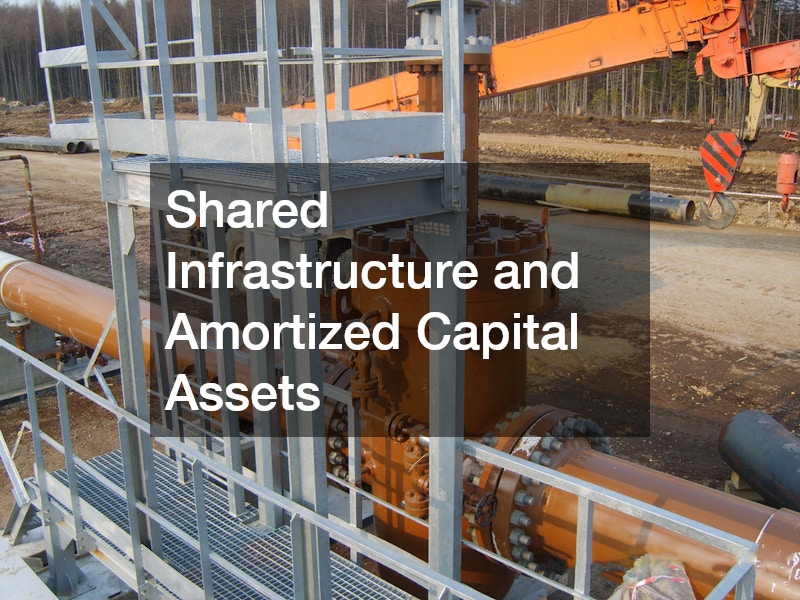
The primary economic driver of an industrial trade hub is the radical reduction of fixed capital expenses through shared resources. In a traditional operational model, every individual business must purchase, maintain, and house its own set of dedicated infrastructure—resulting in redundant capital investment, underutilized machinery, and high site security expenses across every separate location. Conversely, a shared industrial hub centralizes core utilities and high-capacity machinery, allowing resident companies specializing in structural steel, precision machining, finishing, or automotive crafts to split the core infrastructure costs and lower their capital expenditures by thirty to fifty percent.
Consider material handling and heavy assembly. When a shop needs to move massive steel girders or assemble heavy industrial machinery, purchasing and maintaining a dedicated high-capacity rigging system or overhead gantry is a massive financial commitment. Within a trade hub, members can schedule a crane rental only for the precise hours or days required to handle large-scale loading, unloading, or assembly tasks. The administrative burden and maintenance liability are handled by the facility management, converting what would be a massive fixed asset cost into a flexible, predictable operating expense.
The same principle applies to utility setup and facility maintenance equipment. Setting up a new bay or expanding plumbing and conduit lines often requires specialized tools. A business operating within a hub can access a shared tool bank or utilize an on-site used pipe threader to execute facility upgrades and routine piping maintenance without having to purchase single-use machinery outright. By sharing essential maintenance tools and heavy machinery, resident businesses drastically improve their capital efficiency.
Streamlining Digital and Physical Security
In modern manufacturing and industrial services, security and connectivity are non-negotiable operational requirements. However, building out high-grade physical security and enterprise digital infrastructure for an individual shop is expensive and time-consuming. When an independent business owner attempts to construct a modern industrial footprint, the initial line-item costs for site hardening and specialized communications networks can quickly exhaust capital budgets before core machinery is even wired for production.
Trade hubs solve this by amortizing site-wide infrastructure across dozens of tenants. From a physical security standpoint, a single master-planned facility installs a robust commercial fence around the perimeter, complete with automated access gates, surveillance cameras, and centralized monitoring. Individual business owners gain top-tier site security that protects high-value inventory, raw materials, and customer assets without having to fund, erect, or maintain the security barriers themselves. This unified protective barrier drastically reduces site vulnerability, eliminates the need for redundant private security guards, and significantly lowers property insurance premiums across every resident bay. Instead of negotiating complex security installation contracts and bearing sole financial responsibility for site access systems, shop managers simply enjoy turnkey physical protection from day one.
On the digital front, smart manufacturing, computer-aided design (CAD) transfer, and real-time inventory management demand ultra-reliable, low-latency connectivity. Modern industrial equipment increasingly relies on cloud-based telemetry, automated diagnostic monitoring, and instant synchronization with client design platforms. A trade hub invests in a centralized high-speed network powered by enterprise fiber optic cables, running gigabit connections directly to each bay. Rather than each tenant negotiating individual business-tier ISP contracts, navigating lengthy municipal permitting processes, and paying thousands of dollars for private infrastructure construction, the hub delivers high-speed data as an included utility. This centralized approach guarantees redundant, enterprise-grade bandwidth that allows tenants to run digital diagnostics, upload large engineering files, integrate IoT-enabled machinery, and communicate with global supply chains effortlessly, transforming what was once a major technological bottleneck into a seamless, shared asset.
The Ecosystem Effect: Internal Supply Chains and Synergies
While shared physical assets provide immediate cost savings, the long-term competitive advantage of a trade hub lies in its internal ecosystem. When diverse metalworking specialties operate under the same roof, the need for third-party logistics, shipping, and external vendor management decreases dramatically.
In a traditional setup, a raw steel component might be cut at one site, transported across town for structural welding, shipped to a third facility for specialized machining, and sent to a fourth location for protective coating. Each leg of that journey adds freight costs, risk of transit damage, and days or weeks of lead time.
In a well-curated trade hub, that entire value chain occurs within a single physical footprint. Raw stock is delivered directly to the primary bay, where a resident steel fabrication service executes heavy cutting, structural welding, and framing. From there, the component moves seamlessly to an adjacent cutting-edge manufacturing company for high-precision CNC milling and tight-tolerance machining. Once machined, the part transitions immediately to an on-site metal refinishing bay for surface prep, anodizing, powder coating, or high-polish finishing before final assembly—completely eliminating freight fees, minimizing material handling risks, and drastically shortening project lead times.
This internal workflow eliminates freight fees, minimizes material handling risks, and slashes project turnaround times. The customer receives a finished, multi-process metal component in a fraction of the time, while each participating trade business retains a larger portion of the project’s profit margin.
Specialized Bays and Diverse Revenue Streams

The diversity of trades housed within an industrial hub creates a resilient, cross-pollinating business environment. Because the facility accommodates a wide array of specialized equipment and bay configurations, it attracts a variety of niche metal craftspeople and service providers who benefit from proximity to heavy industrial capabilities.
For example, specialized automotive and transportation repair shops find immense value in trade hub environments. An operator focused on rv collision repairs requires expansive bay doors, high clearances, and access to heavy structural alignment gear. By locating within a hub, they can collaborate directly with on-site structural welders to reinforce damaged frames or custom-fabricate obsolete replacement brackets on the spot, turning around complex repairs that standalone body shops would have to decline.
Similarly, precision mechanical trades benefit from the surrounding expertise. Advanced Harley-Davidson mechanics executing custom frame modifications or high-performance engine overhauls can walk down the hall to consult with master machinists, source custom-turned stainless fasteners, or access specialized surface treatments.
Even lighter consumer-facing trades, such as a specialized bike shop building custom titanium or steel bicycle frames, gain a huge operational edge. They get access to industrial-grade TIG welding equipment, specialized tube-bending machinery, and professional finishing booths that would normally be well beyond the budget of a boutique retail craft shop.
This cross-pollination transforms the trade hub from a simple real estate strategy into an active business generator. B2B industrial fabricators regularly pass smaller custom jobs to niche artisans, while consumer-facing repair bays route heavy structural needs back to the industrial teams.
Operational Flexibility and Scaling Without Friction
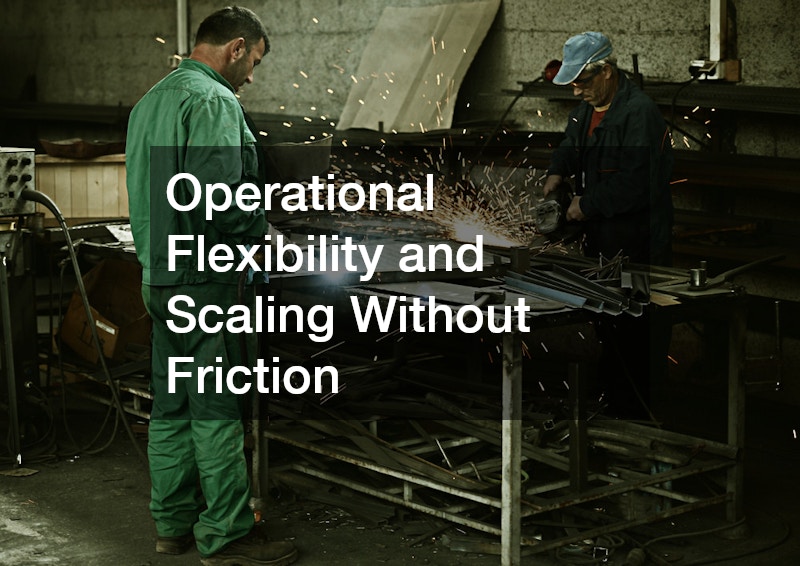
Beyond immediate cost reductions, trade hubs offer metalworking businesses unparalleled agility. In the traditional real estate paradigm, growing a business is fraught with friction. Expanding operations usually means breaking a lease, searching for a larger building, retrofitting a new facility, and relocating heavy machinery—a process that can halt production for months and drain working capital.
Trade hubs operate on flexible, modular space allocation. A growing enterprise can start in a single 1,500-square-foot bay utilizing shared amenities. As order volumes increase, the business can expand into adjacent bays or lease short-term storage space within the facility without changing its core address, altering its supply chain routing, or disrupting its workforce.
Conversely, during economic slowdowns or seasonal shifts, businesses can scale back their footprint or share bay space with complementary trades, keeping fixed costs tightly aligned with active revenue. This elasticity lowers the risk profile of growing a trade business, enabling entrepreneurs to take on larger contracts with confidence.
Environmental Compliance and Waste Management
Operating a metalworking facility involves navigating stringent environmental regulations regarding noise, air quality, hazardous waste, and runoff. Meeting these regulatory standards independently requires substantial investment in filtration systems, sound dampening, and waste disposal protocols.
Trade hubs streamline compliance by centralizing environmental management. Facility managers design built-in containment systems, centralized dust extraction, heavy-duty air filtration, and compliant wash-down bays that serve all tenants. Hazardous waste generated during surface prep or machining—such as coolants, cutting fluids, and chemical solvents—is collected and processed through site-wide disposal contracts, ensuring strict adherence to environmental standards at a fraction of the cost per tenant.
This proactive approach not only protects resident businesses from costly regulatory fines but also appeals to modern corporate clients who prioritize environmentally responsible, sustainable supply chain partners.
The Strategic Path Forward for Metalworking Trades
The economics of the industrial sector have permanently shifted. Rising real estate prices, soaring equipment costs, and tight labor markets mean that independent metalworking companies can no longer rely on traditional operational models to remain competitive.
Industrial trade hubs offer a proven alternative that addresses these modern challenges head-on. By converting heavy fixed overhead into manageable shared costs, providing turnkey enterprise security and high-speed data networks, and fostering a collaborative ecosystem of complementary trades, these hubs allow metalworkers to focus on what they do best: mastering their craft, delivering high-quality products, and growing sustainable businesses.
Whether executing heavy structural projects, delivering precision-manufactured components, or providing specialized restoration services, businesses that embrace the collaborative trade hub model are positioning themselves at the forefront of modern industrial efficiency.